
Engineered hardwood floors offer the timeless beauty of real wood with added stability, making them a popular choice for many homes. While they bring warmth and character to any room, they require proper care to maintain their beauty and condition. Understanding how to clean engineered hardwood floors correctly is key to protecting your investment and ensuring they look great for years to come.
Proper maintenance prevents scratches, dullness, and damage to the wood veneer. Unlike solid hardwood, the top layer is thin, so using the wrong cleaning methods or harsh chemicals can cause irreversible harm. This guide will provide you with a simple, effective routine to keep your floors pristine.
Daily and Weekly Cleaning Routine
Consistent, gentle cleaning is the best way to maintain your engineered hardwood. Dirt and grit act like sandpaper, scratching the surface over time. A regular cleaning schedule removes these abrasive particles before they can cause damage.
Step-by-Step Cleaning Guide
Follow these steps for a simple and effective cleaning process:
- Sweep or Dust Mop Daily: The first line of defense is removing surface dust and debris. Use a broom with soft bristles or a microfiber dust mop every day or every other day. This simple action prevents the buildup of abrasive particles that can scratch the floor’s finish.
- Vacuum Weekly: For a deeper clean, use a vacuum cleaner once a week. It’s important to use a vacuum designed for hard surfaces. Use a soft brush attachment and turn off the beater bar or rotating brush, as these stiff bristles can scratch or dent the wood veneer.
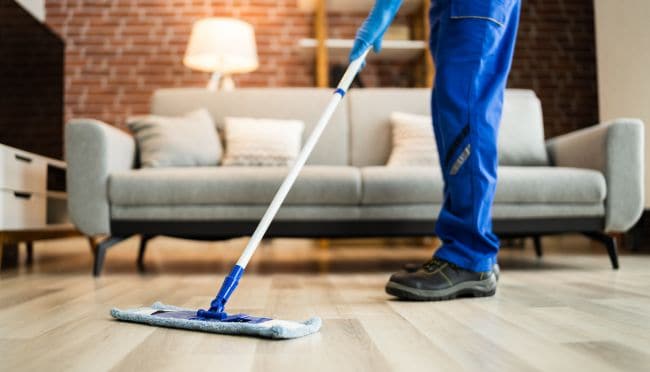
- Damp Mop as Needed: Spills and stuck-on dirt require a bit more effort. Use a microfiber mop lightly dampened with a suitable cleaning solution. Never saturate your floor with water, as excess moisture can seep between the planks and cause swelling or damage to the core layers. The mop should be just damp enough to clean without leaving puddles.
- Choose the Right Cleaner: Always use a pH-neutral cleaner specifically formulated for hardwood floors. Avoid using vinegar, ammonia, oil-based soaps, or abrasive cleaners. These products can strip the protective finish, leaving your floors looking dull and vulnerable to damage. Always check the flooring manufacturer’s recommendations for approved cleaning products.
- Dry the Floor Immediately: After damp mopping, go over the area with a clean, dry microfiber cloth or towel. This step removes any lingering moisture and prevents water spots or streaks from forming, leaving you with a beautiful, clean surface.
Spot Cleaning and Stain Removal
Accidents happen, but quick action can prevent a small spill from becoming a permanent stain.
- Wipe Up Spills Immediately: Use a soft, absorbent cloth to blot up any liquid spills as soon as they occur.
- Tackle Tough Spots: For sticky residue or stubborn spots, spray a small amount of approved hardwood floor cleaner directly onto a microfiber cloth (not the floor). Gently rub the spot until it’s gone.
- Avoid Scouring Pads: Never use steel wool or other abrasive scouring pads, as they will scratch the finish.
Comparing Flooring Types
Understanding how your engineered hardwood compares to other popular flooring options can help you appreciate its unique maintenance needs.
| Feature | Engineered Hardwood | Solid Hardwood | Laminate | Vinyl (LVP/LVT) |
| Maintenance | Low-Medium. Requires specific cleaners and minimal water. | Medium-High. Can be refinished but is sensitive to moisture. | Low. Very easy to clean, but cannot be repaired easily. | Low. Waterproof and highly resistant to stains and scratches. |
| Durability | Good. The top layer can scratch, and it cannot be refinished many times. | Very Good. Can be sanded and refinished multiple times over its life. | Good. Very scratch-resistant, but chips are hard to fix. | Excellent. Waterproof, scratch-resistant, and ideal for high-traffic areas. |
| Cost | Mid-Range. Generally less expensive than solid hardwood. | High. The most expensive option upfront. | Low. One of the most affordable flooring options. | Low-Mid. Affordable and offers great value. |
Frequently Asked Questions (FAQs)
Here are answers to some common questions about caring for engineered hardwood floors.
Can I use a steam mop on my engineered hardwood floors?
No, you should never use a steam mop on engineered hardwood. The high heat and moisture from the steam can penetrate the seams of the planks, causing the layers to delaminate, warp, or swell. It can also damage the protective finish.
What should I do about scratches on the floor?
For minor, surface-level scratches, you can often use a touch-up kit or stain marker that matches your floor’s color. For deeper scratches that have penetrated the finish, it’s best to consult a professional flooring expert to assess the damage and recommend a solution.
How can I protect my floors from furniture?
Place felt pads or furniture coasters under the legs of all your furniture, including chairs, tables, and sofas. This prevents scratches and dents when furniture is moved. For heavy items, use larger, non-staining floor protectors to distribute the weight more evenly.
Is it okay to use a vinegar and water solution to clean the floors?
It is not recommended. Vinegar is an acidic substance that can break down the polyurethane finish on your engineered hardwood over time. This will dull the floor’s appearance and leave it more susceptible to damage. Always stick to a pH-neutral cleaner made for wood floors.
How often should I deep clean my engineered hardwood floors?
A deep clean is not usually necessary if you maintain a regular sweeping and damp mopping routine. You should only damp mop when the floor is visibly dirty, perhaps every 1-2 months depending on foot traffic. The key is consistent light cleaning rather than infrequent heavy cleaning.